
Introduction: Understanding Three Traditional Catholic Devotions
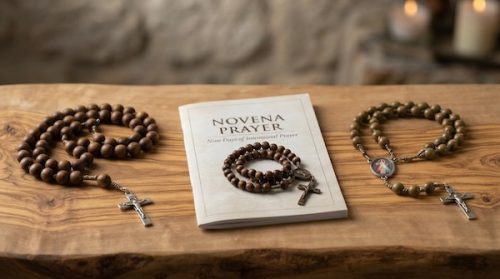
Catholic prayer is rich in tradition, and the Church offers many beautiful ways to help us grow closer to God. Among the most popular Catholic devotions are novenas, the Holy Rosary, and chaplets.
Many Catholics pray these devotions regularly, but others may wonder: What is the difference between a novena, a Rosary, and a chaplet? Are they all the same type of prayer? Can you pray all three? And when should you choose one over another?
Although these three devotions share the same purpose of helping us grow in faith and deepen our relationship with God, they have different structures, traditions, and spiritual focuses.
A novena is traditionally a prayer offered over nine consecutive days, often asking God for a particular intention or grace.
The Holy Rosary is a meditative prayer that helps us reflect on the life, death, and Resurrection of Jesus Christ through the mysteries of the Gospel, with the Blessed Virgin Mary guiding us toward her Son.
A chaplet is a particular form of Catholic devotion, usually prayed with beads, using repeated prayers focused on a specific mystery, attribute of God, or devotion.
All three are beautiful expressions of Catholic spirituality. They help us pray with perseverance, meditate on God’s Word, seek the intercession of the saints, and place our intentions before the Lord.
Understanding their differences can help you choose the prayer that best supports your spiritual needs and your daily relationship with Jesus Christ.
1. What Is a Novena in the Catholic Church?
A novena is a traditional Catholic devotion consisting of prayers offered over nine consecutive days. The word novenacomes from the Latin word novem, which means nine.
Catholics pray novenas for many reasons, including asking for God’s guidance, seeking healing, praying for family members, asking for strength during difficult times, and preparing for important Church feasts.
A novena can be addressed directly to God, to Jesus Christ, or to the Holy Spirit. It can also ask for the intercession of the Blessed Virgin Mary or a particular saint.
When Catholics pray a novena to a saint, they are not worshiping that saint. They are asking the saint to intercede for them before God.
Where Does the Tradition of the Novena Come From?
The tradition of praying for nine days has a special biblical connection.
After the Ascension of Jesus into heaven, the Apostles gathered in Jerusalem and devoted themselves to prayer together with Mary, the Mother of Jesus, and other disciples.
Acts 1:14 tells us:
“All these were persevering with one mind in prayer with the women and Mary the mother of Jesus, and with his brethren.”
The Apostles waited in prayer for the coming of the Holy Spirit, as Jesus had promised.
The period between the Ascension and Pentecost is traditionally understood as nine days of prayer. It provides an important biblical foundation for the Catholic tradition of the novena.
Why Do Catholics Pray Novenas for Nine Days?
Nine days of prayer remind us of the perseverance and unity of the early Christian community.
A novena encourages us to remain faithful in prayer rather than asking God for something only once and immediately giving up.
Jesus taught His disciples the importance of perseverance in prayer.
Luke 18:1 says:
“And he spoke also a parable to them, that we ought always to pray, and not to faint.”
A novena is an opportunity to bring our intentions to God repeatedly, with humility, patience, and trust in His divine will.
However, a novena is not a magical formula. Praying for nine days does not guarantee that we will receive exactly what we request or that God must answer according to our timetable.
Instead, a novena helps us surrender our needs to God and trust in His wisdom.
Popular Catholic Novenas
There are many traditional Catholic novenas dedicated to Jesus, Mary, the Holy Spirit, and the saints.
Some of the most popular include:
- Novena to Our Lady of the Miraculous Medal: A devotion asking for Mary’s intercession and the graces of God.
- Novena to Saint Jude: Traditionally prayed for difficult and seemingly impossible situations.
- Novena to Saint Joseph: Seeking his intercession for families, workers, fathers, and those in need.
- Novena to the Holy Spirit: Asking for the gifts and guidance of the Holy Spirit.
- Novena to Saint Rita: Seeking her intercession in difficult circumstances.
- Novena to Saint Padre Pio: Asking for his prayers and spiritual assistance.
- Divine Mercy Novena: A special nine-day devotion associated with the Divine Mercy devotion revealed to Saint Faustina.
- Novena to the Sacred Heart of Jesus: A devotion centered on the love and mercy of Christ.
When Should You Pray a Novena?
You can pray a novena whenever you have a particular intention or desire to grow spiritually.
For example, you may pray a novena:
- When someone in your family is sick.
- When you need guidance before making an important decision.
- When you are experiencing financial or personal difficulties.
- When you are praying for the conversion of a loved one.
- When you want to prepare spiritually for a Catholic feast.
- When you are asking for strength, patience, or peace.
- When you want to deepen your devotion to a particular saint.
You do not have to wait until you experience a serious problem to pray a novena. You can also offer one as an act of thanksgiving or as a way of growing closer to God.
Remember: A novena is not about forcing God to answer our prayers. It is about persevering in prayer and trusting His divine plan.
2. What Is the Holy Rosary?
The Holy Rosary is one of the most beloved and widely practiced Catholic devotions in the world.
It is a form of meditative prayer in which Catholics reflect on important events in the lives of Jesus Christ and the Blessed Virgin Mary.
Although the Rosary includes repeated prayers such as the Our Father and Hail Mary, its deepest purpose is not simply repetition. It is contemplation of the mysteries of our salvation.
Through the Rosary, we meditate on the Incarnation, the public ministry of Jesus, His Passion and death, His Resurrection, and the glory of heaven.
The Blessed Virgin Mary helps us contemplate these mysteries because she was intimately connected to the life of Jesus.
Why Is the Rosary So Important to Catholics?
The Rosary combines vocal prayer with meditation.
As Catholics pray each decade, they reflect on a particular mystery from the Gospel.
The prayers help us remain focused, while the mysteries direct our hearts and minds toward Christ.
The Rosary traditionally includes four sets of mysteries:
1. The Joyful Mysteries
These mysteries focus on the early life of Jesus and the events surrounding His birth.
- The Annunciation.
- The Visitation.
- The Nativity of Jesus.
- The Presentation of Jesus in the Temple.
- The Finding of Jesus in the Temple.
2. The Luminous Mysteries
These mysteries focus on the public ministry of Jesus.
- The Baptism of Jesus in the Jordan.
- The Wedding at Cana.
- The Proclamation of the Kingdom of God.
- The Transfiguration.
- The Institution of the Holy Eucharist.
3. The Sorrowful Mysteries
These mysteries help us meditate on the suffering and death of Jesus Christ.
- The Agony in the Garden.
- The Scourging at the Pillar.
- The Crowning with Thorns.
- The Carrying of the Cross.
- The Crucifixion and Death of Jesus.
4. The Glorious Mysteries
These mysteries focus on the Resurrection of Jesus and the glory of heaven.
- The Resurrection of Jesus.
- The Ascension of Jesus.
- The Descent of the Holy Spirit.
- The Assumption of the Blessed Virgin Mary.
- The Coronation of Mary as Queen of Heaven and Earth.
Each set contains five mysteries, traditionally prayed on different days of the week.
How Do Catholics Pray the Rosary?
The traditional Rosary begins with the Sign of the Cross, followed by the Apostles’ Creed, one Our Father, three Hail Marys, and one Glory Be.
Then the five decades begin.
For each decade, Catholics announce a mystery, pray one Our Father, ten Hail Marys, and one Glory Be. The Fatima Prayer is also commonly included.
The Rosary concludes with the Hail Holy Queen and other customary closing prayers.
A complete five-decade Rosary generally takes approximately 15 to 25 minutes, depending on the pace and additional prayers.
What Does the Bible Say About the Rosary?
The Rosary is not a prayer explicitly commanded by Scripture, nor does the Bible use the word “Rosary.”
However, many of its prayers and meditations are deeply rooted in the Bible.
The Our Father comes directly from the prayer Jesus taught His disciples in Matthew 6:9-13.
The Hail Mary includes the greeting of the Angel Gabriel in Luke 1:28 and the words of Elizabeth in Luke 1:42.
The mysteries of the Rosary reflect events recorded throughout the Gospels.
For example:
- Luke 1:26-38 describes the Annunciation.
- Luke 2:1-20 describes the birth of Jesus.
- Matthew 3:13-17 describes the Baptism of Jesus.
- Matthew 26:36-46 describes the Agony in the Garden.
- John 19:16-30 describes the Crucifixion.
- Matthew 28:1-10 describes the Resurrection.
The Rosary therefore helps Catholics meditate on the life and teachings of Jesus Christ through Scripture.
When Should You Pray the Rosary?
The Rosary can be prayed at any time of the day.
Many Catholics pray it in the morning, during the evening, before going to sleep, or as part of their family prayer.
You may find it especially meaningful:
- When you want to meditate on the life of Jesus.
- When you need peace during a stressful period.
- When you are praying for your family and loved ones.
- When you want to grow closer to the Blessed Virgin Mary.
- When you are preparing for a difficult situation.
- When you want to strengthen your daily prayer life.
The Rosary is also a beautiful prayer for families, parish communities, and groups of believers.
Remember: The Rosary is Christ-centered meditation. Mary teaches us to listen to her Son and follow Him.
3. What Is a Chaplet in the Catholic Church?
A chaplet is a traditional Catholic devotion that consists of a particular arrangement of prayers, often prayed using a set of beads.
Unlike the Rosary, which follows a specific structure of five decades and meditates on the mysteries of Christ’s life, a chaplet usually focuses on a particular spiritual theme, devotion, or mystery.
Some chaplets honor a particular aspect of God’s mercy, the Sacred Heart of Jesus, the Holy Face, or the wounds of Christ.
Other chaplets are associated with the Blessed Virgin Mary or particular saints.
The word chaplet can refer both to the devotion itself and to the beads or prayer arrangement used to pray it.
What Is the Purpose of a Chaplet?
The purpose of a chaplet is to help Catholics focus their prayers on a particular spiritual intention or mystery.
For example, the Divine Mercy Chaplet emphasizes God’s mercy and our need to trust in Jesus.
The Chaplet of the Holy Face focuses on devotion to the Holy Face of Jesus.
The Chaplet of Saint Michael honors the Archangel Michael and seeks his intercession.
Each chaplet has its own prayers and structure, so it is important to follow the traditional instructions associated with that devotion.

Popular Catholic Chaplets
Here are some of the best-known Catholic chaplets:
1. Divine Mercy Chaplet
The Divine Mercy Chaplet is one of the most popular Catholic devotions. It was given to Saint Faustina Kowalska in the context of the Divine Mercy revelations.
It is usually prayed using ordinary Rosary beads.
The central prayer is:
“For the sake of His sorrowful Passion, have mercy on us and on the whole world.”
The chaplet emphasizes God’s infinite mercy and encourages us to trust in Jesus.
2. Chaplet of Saint Michael the Archangel
This chaplet honors Saint Michael and the nine choirs of angels.
It includes prayers asking for the intercession and protection of Saint Michael and the heavenly angels.
3. Chaplet of the Sacred Heart of Jesus
This devotion focuses on the Sacred Heart of Jesus and His immense love for humanity.
It encourages Catholics to contemplate Christ’s mercy, sacrifice, and love.
4. Chaplet of the Holy Wounds of Jesus
This chaplet focuses on the sacred wounds of Christ suffered during His Passion.
It invites Catholics to meditate on the suffering of Jesus and the price of our redemption.
5. Chaplet of the Immaculate Heart of Mary
This Marian devotion honors the Immaculate Heart of Mary and encourages believers to imitate her purity, faith, and complete dedication to God.
When Should You Pray a Chaplet?
You can pray a chaplet whenever you feel drawn to a particular devotion or spiritual intention.
For example:
- Pray the Divine Mercy Chaplet when you want to reflect on God’s mercy and pray for the world.
- Pray the Chaplet of Saint Michael when seeking his intercession and protection.
- Pray the Chaplet of the Sacred Heart when meditating on the love of Jesus.
- Pray the Chaplet of the Holy Wounds when reflecting on Christ’s Passion.
- Pray a Marian chaplet when seeking Mary’s intercession and wanting to imitate her virtues.
Unlike a traditional novena, a chaplet does not necessarily have to be prayed for nine consecutive days. Many chaplets can be prayed daily or whenever desired.
Some chaplet devotions are also incorporated into novenas.
Remember: A chaplet is a focused form of Catholic prayer that helps us meditate on a particular mystery or devotion.
4. Novena vs. Rosary vs. Chaplet: What Is the Difference?
Although novenas, the Rosary, and chaplets are all Catholic devotions, they have different purposes and structures.
Here is a simple comparison:
| Catholic devotion | What it is | Main purpose |
|---|---|---|
| Novena | A devotion traditionally prayed for nine days | Persevere in prayer for a particular intention or spiritual grace |
| Rosary | A meditative prayer with five decades | Meditate on the life, death, and Resurrection of Jesus |
| Chaplet | A particular arrangement of devotional prayers, often using beads | Focus on a specific mystery, attribute, or devotion |
The Main Difference
The most important difference is how each devotion is structured and what it emphasizes.
A novena is defined primarily by its duration: nine days of prayer.
The Rosary is defined by its structure and meditation on the mysteries of Christ.
A chaplet is defined by its particular devotional prayer structure and spiritual focus.
For example, you might pray a nine-day novena to Saint Jude for a difficult family situation, pray the Rosary every evening to meditate on the life of Jesus, and pray the Divine Mercy Chaplet at 3:00 PM to reflect on Christ’s Passion and mercy.
These devotions are not competitors. They complement one another and can all have a place in your Catholic prayer life.
5. Can You Pray a Novena, Rosary, and Chaplet Together?
Yes! Catholics can pray a novena, the Rosary, and a chaplet on the same day.
There is no rule that says you must choose only one of these devotions.
Each offers a different way to grow spiritually.
For example, you could begin your morning with the Rosary, pray a novena during the day, and conclude your evening with the Divine Mercy Chaplet.
You can also find novenas that incorporate the Rosary or a particular chaplet into their daily prayers.
However, remember that prayer is not about completing the greatest number of devotions.
The goal is not to rush through as many prayers as possible. What matters most is praying with sincerity, faith, attention, and love for God.
Even a short prayer offered with a sincere heart is precious.
Jesus teaches us in Matthew 6:7 not to think that we will be heard because of many words.
Our prayer should come from a heart that trusts in God.
6. Which Catholic Prayer Should You Choose?
If you are unsure which devotion to pray, begin by considering what you need spiritually.
Choose a novena if:
- You have a particular intention you want to bring to God.
- You are preparing for a feast day.
- You want to develop perseverance in prayer.
- You are asking for the intercession of Mary or a particular saint.
- You want to dedicate nine days to a spiritual intention.
Choose the Rosary if:
- You want to meditate on the life of Jesus.
- You want to develop a consistent daily prayer habit.
- You are praying for your family.
- You want to deepen your Marian devotion.
- You want to reflect on the mysteries of salvation.
Choose a chaplet if:
- You want to focus on a particular devotion.
- You want to meditate on God’s mercy.
- You want to honor the Sacred Heart or the Holy Wounds of Jesus.
- You want to ask for the intercession of Saint Michael or another saint.
- You want a focused prayer with a particular structure.
You do not need to wait for a difficult moment to pray. These devotions can become part of your everyday relationship with God.
7. The Most Important Thing: Prayer Must Lead Us Closer to God
Whether you pray a novena, the Rosary, or a chaplet, remember that the purpose of Catholic prayer is to deepen your relationship with God.
Prayer is not a magic formula. It is not a way to force God to grant our wishes or guarantee that every problem will disappear.
Prayer is an expression of faith, love, trust, and surrender.
Jesus tells us:
Matthew 7:7
“Ask, and it shall be given you: seek, and you shall find: knock, and it shall be opened to you.”
We are invited to bring our needs before God, trust in His mercy, and remain faithful even when His answer is different from what we expected.
The Catechism of the Catholic Church teaches that prayer is a living relationship with God (CCC 2565).
This is the heart of every Catholic devotion.
A novena teaches us perseverance. The Rosary teaches us to contemplate Christ. A chaplet helps us focus on a particular mystery of our faith.
All three can help us grow in holiness when prayed with sincere hearts.
FAQ About Novenas, the Rosary, and Chaplets
1. What is the difference between a novena and a Rosary?
A novena is traditionally a nine-day devotion offered for a particular intention or spiritual purpose. The Rosary is a meditative Catholic prayer that focuses on the mysteries of the life, death, and Resurrection of Jesus Christ. A novena is defined by its duration, while the Rosary is defined by its structure and mysteries.
2. Is a chaplet the same as a Rosary?
No. A chaplet is a particular Catholic devotional prayer, often prayed using beads, with its own structure and spiritual focus. The Rosary follows a more established structure of five decades and meditates on the mysteries of Christ’s life. Some chaplets use ordinary Rosary beads, but they are different devotions.
3. Can I pray a novena and the Rosary together?
Yes. Catholics can pray both devotions on the same day. You may pray a novena for a particular intention and the Rosary as part of your daily spiritual life.
4. How many days do you pray a novena?
A traditional novena is prayed for nine consecutive days. Some novenas are also prayed over nine weeks or follow other special arrangements, but the traditional form consists of nine days.
5. Do I need Rosary beads to pray a chaplet?
Not always. Some chaplets use ordinary Rosary beads, while others require a different arrangement of beads. Certain chaplets can also be prayed without beads by counting the prayers or following their written instructions.
6. Which is more powerful: a novena, Rosary, or chaplet?
The Catholic Church does not teach that one of these devotions is automatically more powerful than the others. Their spiritual value depends on the grace of God and the sincere faith of the person praying. Each devotion serves a different purpose and can help us grow closer to God.
7. Can I pray a novena even if I miss one day?
If you miss a day, do not become discouraged. Try to continue your prayer and follow the instructions of the particular novena. Some traditional novenas have specific requirements, so consult their instructions. Remember that prayer should not become a source of fear or superstition.
8. Can I pray a chaplet every day?
Yes. Many Catholics pray chaplets daily as part of their spiritual routine. The Divine Mercy Chaplet, for example, is commonly prayed every day, especially at 3:00 PM.
9. Can I pray a novena to Mary or a saint?
Yes. Catholics can ask the Blessed Virgin Mary and the saints to intercede for them. The prayer is ultimately directed toward God, who is the source of every grace.
10. What is the best Catholic prayer for beginners?
The Our Father is an excellent place to begin because Jesus Himself taught it to His disciples. Beginners can also learn the Hail Mary, Glory Be, and the basic prayers of the Rosary. A simple daily prayer offered with faith is a beautiful beginning.
Final Reflection: Make Prayer Part of Your Daily Catholic Life
Novenas, the Holy Rosary, and chaplets are beautiful treasures of Catholic spirituality.
Each devotion offers a different way to express our love for God and strengthen our faith.
When you need to persevere in prayer for a particular intention, consider praying a novena.
When you want to meditate on the life of Jesus Christ, take your Rosary and reflect on the mysteries of our salvation.
When you want to focus on God’s mercy, the Sacred Heart, the Holy Wounds of Christ, or the intercession of the angels and saints, consider praying a chaplet.
Most importantly, do not allow prayer to become simply a daily obligation or a list of prayers to complete.
Pray with your heart. Trust in God’s timing. Remain faithful in difficult moments, and remember that God always hears the sincere prayers of His children.
Whether you pray for nine days, meditate on five mysteries, or recite a chaplet with your beads, let every prayer bring you closer to Jesus Christ.
May the Lord bless you, strengthen your faith, and guide you through every prayer. Amen.
Leave us your prayers…