
We Believe in One, Holy, Catholic, and Apostolic Church: What Does It Mean?
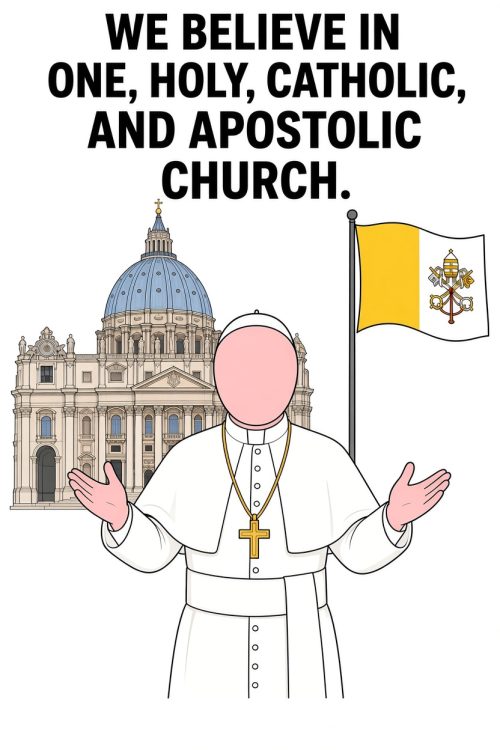
“We believe in one, holy, catholic, and apostolic Church.”
These are not merely words we recite every Sunday during the Nicene Creed. They are a powerful profession of faith and a reminder of the Church that Jesus Christ established. Every time we proclaim these words, we affirm our belief in the identity, mission, and divine foundation of the Catholic Church.
As Catholics, we believe that the Church is ONE because Christ has one Body. She is HOLY because her founder is Jesus Christ and she is guided by the Holy Spirit. She is CATHOLIC because her mission is universal, embracing all nations and peoples. And she is APOSTOLIC because she is built upon the foundation of the Apostles and continues their mission through apostolic succession.
But what do these four marks of the Church truly mean? Why are they important to our Catholic faith, and what does Sacred Scripture teach us about them?
Let us explore these four essential characteristics of the Church established by Jesus Christ.
1. The Church Is ONE
As Catholics, we believe that the Church is one because Jesus Christ established one Church, not many separate churches with different foundations or different gospels.
Our unity comes from Jesus Christ, who is the Head of the Church, and from the Holy Spirit, who brings believers together as one Body.
In the Gospel of John, Jesus prayed for the unity of His disciples:
“That they may all be one; even as thou, Father, art in me, and I in thee, that they also may be in us.” (John 17:21)
This prayer reveals how deeply Christ desires unity among His followers. The Church is called to reflect the unity of the Father, the Son, and the Holy Spirit.
Saint Paul also reminds us:
“There is one body and one Spirit, just as you were called to the one hope that belongs to your call, one Lord, one faith, one baptism.” (Ephesians 4:4–5)
The Catholic Church’s unity is expressed through one faith, one celebration of the Sacraments, one Eucharist, and communion with the Pope and the bishops united with him.
Although Catholics come from different countries, cultures, languages, and traditions, we share the same faith in Jesus Christ.
We may celebrate the liturgy according to different Catholic rites, including the Latin and Eastern Catholic traditions, but we remain united in the same Catholic Church.
Unity does not mean that every Catholic has the same personality, culture, or opinion about everything. It means that we are united in the essential truths of our faith and in the communion Christ entrusted to His Church.
We must always pray and work for Christian unity, remembering that Jesus Himself prayed that His followers would be one.

2. The Church Is HOLY
The Catholic Church is holy because her founder is Jesus Christ, who is perfectly holy, and because the Holy Spirit dwells within her and guides her.
The Church receives her holiness from God. She is called to lead people toward holiness through the Gospel, the Sacraments, prayer, and the teachings of Jesus Christ.
In the First Letter of Peter, we read:
“But as he who called you is holy, be holy yourselves in all your conduct.” (1 Peter 1:15)
This is not simply a recommendation. It is a call to every Christian to live according to the teachings of Christ.
Through Baptism, we become children of God and members of His Church. Through the Eucharist, we receive Jesus Christ, the Bread of Life. Through Confession, we receive God’s forgiveness and the grace to begin again.
The Church gives us the spiritual means to grow in holiness and deepen our relationship with God.
However, we must understand something important: the holiness of the Church does not mean that every member of the Church is perfect.
Catholics are human beings who can make mistakes and commit sins. Even those entrusted with important responsibilities within the Church need God’s mercy and forgiveness.
The sins of individual members do not change the holiness of Christ or the truth of His teachings.
The Church is holy because she belongs to Christ, teaches the truth He revealed, celebrates the Sacraments, and continually calls sinners to conversion.
As Catholics, we are called not only to believe in a holy Church but also to become holy ourselves through faith, prayer, charity, forgiveness, and obedience to God’s commandments.
3. The Church Is CATHOLIC
The word Catholic comes from the Greek word katholikos, meaning universal or according to the whole.
The Catholic Church is universal because her mission is for all people, in every nation, culture, and generation.
Jesus did not establish His Church for one particular country, language, or group of people. He came to save the world, and He commanded His Apostles to proclaim the Gospel to all nations.
Before ascending into Heaven, Jesus gave His disciples this mission:
“Go therefore and make disciples of all nations, baptizing them in the name of the Father and of the Son and of the Holy Spirit.” (Matthew 28:19)
This is the universal mission of the Catholic Church.
Today, Catholics worship God in different languages and celebrate the liturgy according to different traditions, but we are united in the same faith and the same universal Church.
From the Holy Land, where Jesus walked and preached the Gospel, to churches throughout Europe, Africa, Asia, the Americas, and Oceania, the Catholic faith continues to unite millions of believers.
The Church is not limited by borders or national identities. Her mission is to bring the message of salvation to every person.
Being Catholic means belonging to a worldwide spiritual family. Wherever we go, we can find brothers and sisters who share our faith in Jesus Christ, our devotion to the Eucharist, and our love for the Blessed Virgin Mary and the saints.
The Church is also called to proclaim the fullness of the Christian faith and to invite everyone to encounter Jesus Christ.
We are Catholic because the Gospel is for everyone.
4. The Church Is APOSTOLIC
The Catholic Church is apostolic because she was founded by Jesus Christ upon the Apostles and continues to preserve and proclaim their teachings.
Jesus chose twelve Apostles and entrusted them with a special mission: to preach the Gospel, baptize believers, forgive sins, celebrate the Eucharist, and lead His people.
In the Gospel of Matthew, Jesus said to Peter:
“And I tell you, you are Peter, and on this rock I will build my church, and the powers of death shall not prevail against it.” (Matthew 16:18)
These words reveal the special responsibility Jesus entrusted to Peter in the Church.
The Catholic Church recognizes Peter as the first among the Apostles and the beginning of the ministry that continues through his successors, the Popes.
This continuity is known as apostolic succession.
Through apostolic succession, bishops receive their authority and responsibility through an unbroken line of episcopal ordination reaching back to the Apostles.
The Pope, as the successor of Saint Peter, and the bishops in communion with him continue the apostolic mission of guiding, teaching, and sanctifying the people of God.
The Church also remains apostolic because she faithfully preserves the teachings handed down by the Apostles through Sacred Scripture and Sacred Tradition.
Saint Paul reminds the early Christians:
“So then, brethren, stand firm and hold to the traditions which you were taught by us, either by word of mouth or by letter.” (2 Thessalonians 2:15)
This passage reminds us that the Christian faith was transmitted both orally and in writing.
The Catholic Church has the responsibility to preserve this deposit of faith and faithfully hand it down to future generations.
We are not inventing a new faith. We are receiving and living the faith entrusted by Jesus Christ to His Apostles.
Why Are the Four Marks of the Catholic Church Important?
The four marks of the Church are not simply historical descriptions or theological expressions. They help us understand what we believe and why the Catholic Church has a unique identity and mission.
When we profess that the Church is one, holy, catholic, and apostolic, we are declaring our faith in the Church Christ established.
These four marks also remind us of our responsibilities as Catholics:
- Be united: Pray for unity, avoid unnecessary divisions, and remain faithful to the teachings of Christ.
- Strive for holiness: Receive the Sacraments, pray daily, forgive others, and follow the example of Jesus.
- Share the Gospel: Remember that the Catholic faith is universal and that every person deserves to hear the Good News.
- Remain faithful to the Apostles: Learn the teachings of the Church, respect Sacred Tradition, and pass the Catholic faith to future generations.
We should never be ashamed of our Catholic identity. Instead, we should seek to understand our faith, know its teachings, and have the courage to live it every day.
Being Catholic is not simply about belonging to a religious institution. It is about belonging to the Body of Christ, participating in the life of the Church, receiving His grace through the Sacraments, and following Him faithfully.
FAQ About the Four Marks of the Catholic Church
What are the four marks of the Catholic Church?
The four marks are ONE, HOLY, CATHOLIC, and APOSTOLIC. These characteristics are professed in the Nicene Creed and describe the identity and mission of the Church established by Jesus Christ.
Where do Catholics profess the four marks of the Church?
Catholics profess the four marks during the Nicene Creed, which is recited during Sunday Mass and on certain solemnities and feast days.
Why is the Catholic Church called one?
The Church is one because Jesus Christ established one Body, united through one faith, one Baptism, one Eucharist, and communion among her members.
Why is the Catholic Church called holy if her members are sinners?
The Church is holy because her founder is Jesus Christ and she is guided by the Holy Spirit. Although her members are sinners and need God’s mercy, the Church continues to offer the means of grace and the call to holiness.
What does Catholic mean?
Catholic means universal. The Church is Catholic because her mission is to proclaim the Gospel to all nations and welcome people from every culture and generation.
What is apostolic succession?
Apostolic succession is the unbroken succession of bishops through the Sacrament of Holy Orders, tracing their ministry back to the Apostles. It preserves the continuity of the Church’s apostolic mission.
A Prayer for Faithfulness to the Catholic Church
Heavenly Father,
Thank You for the gift of Your Church, established by Your Son, Jesus Christ.
Help us remain faithful to the one, holy, catholic, and apostolic Church. Strengthen our faith, deepen our love for the Eucharist, and guide us through the Holy Spirit.
Teach us to live in unity, seek holiness, proclaim the Gospel, and remain faithful to the teachings handed down by the Apostles.
Never allow us to be ashamed of our Catholic faith. Give us the courage to defend the truth with love, to serve others with humility, and to follow Jesus Christ every day of our lives.
Bless the Holy Father, our bishops, priests, religious, and all the faithful throughout the world.
May we always remain united in Christ, our Lord and Savior.
Amen.
One Lord. One Faith. One Baptism. One Church.
Our Catholic faith is a precious gift that has been handed down through generations. We belong to a Church that has proclaimed the Gospel, celebrated the Holy Eucharist, preserved the Sacraments, and carried the message of Jesus Christ throughout the world.
Let us never forget what we profess when we recite the Nicene Creed.
We believe in ONE Church, united in Christ.
We believe in a HOLY Church, guided by the Holy Spirit.
We believe in a CATHOLIC Church, sent to all nations.
We believe in an APOSTOLIC Church, faithful to the teachings of the Apostles.
May we always love our Catholic faith, remain faithful to Jesus Christ, and help pass this beautiful gift to the next generation.
One Lord. One Faith. One Baptism. One Church.
In the name of the Father, and of the Son, and of the Holy Spirit. Amen.
Leave us your prayers…